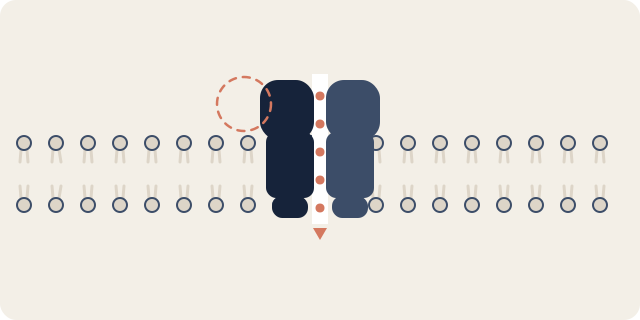
GABA-A受体与Shisa7、TMEM132B等辅助亚基如何聚集、组装成功能性抑制性突触。 How GABA-A receptors and auxiliary subunits such as Shisa7 and TMEM132B cluster and assemble into functional inhibitory synapses.
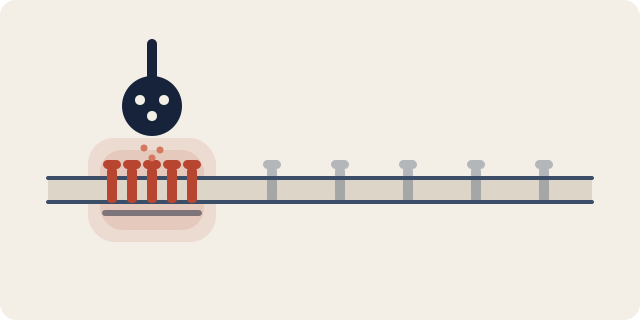
弥散于突触外膜的受体介导持续的“张力性抑制”——大脑的背景刹车;受体的扩散与转运动态调节这一过程。 Receptors dispersed across the extrasynaptic membrane mediate persistent "tonic" inhibition — the brain's background brake — dynamically tuned by receptor diffusion and trafficking.
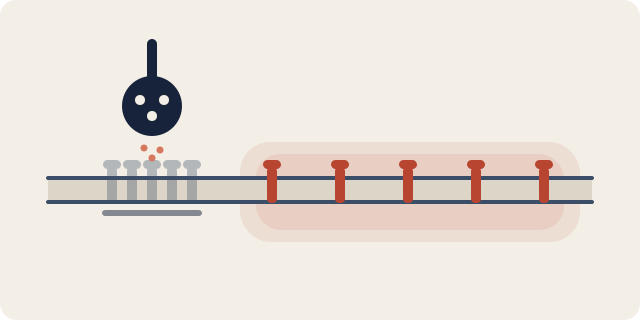
睡眠与觉醒如何动态调控抑制性突触可塑性;麻醉与意识转换的分子与神经环路机制。 How sleep and wakefulness dynamically regulate inhibitory synaptic plasticity; the molecular and circuit mechanisms of anesthesia and consciousness.
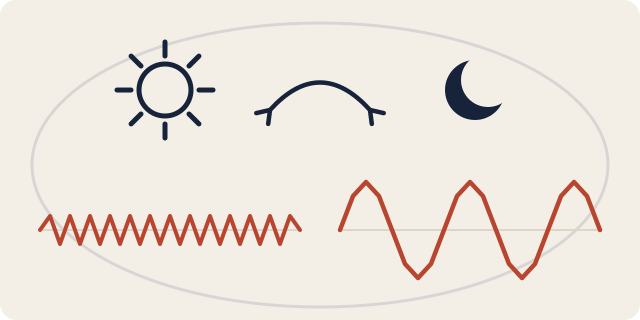
苯二氮䓬类药物、酒精与麻醉剂如何变构调节GABA-A受体——下一代神经系统疾病药物的靶点。 How benzodiazepines, alcohol, and anesthetics allosterically modulate GABA-A receptors — targets for next-generation therapeutics for brain disorders.