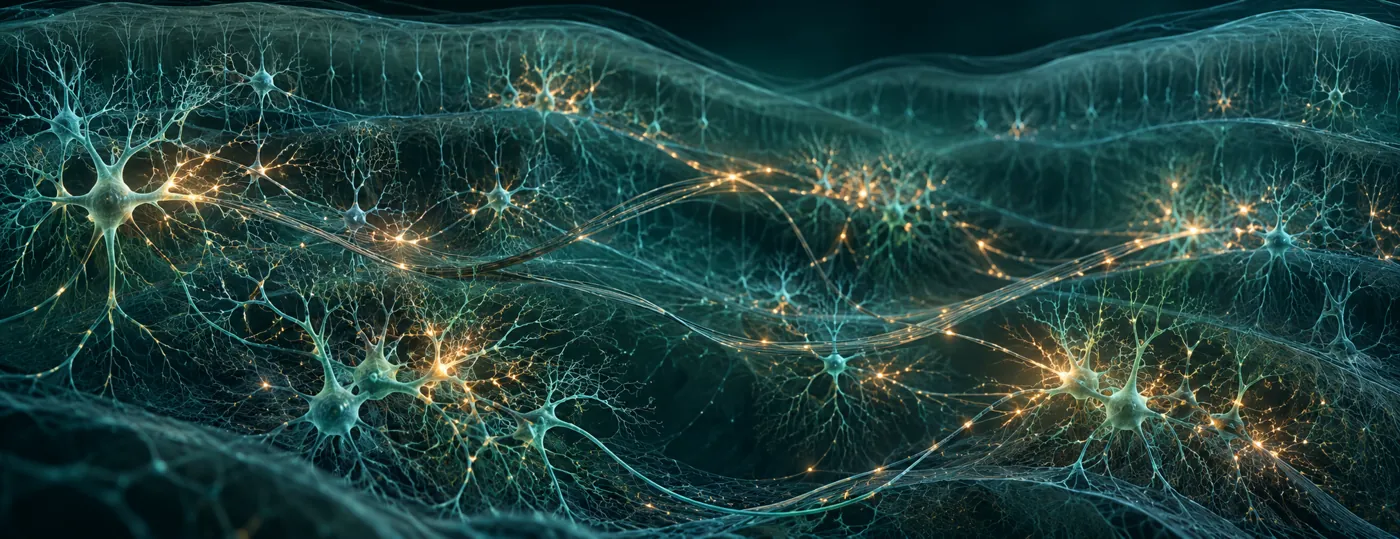
Systems mechanisms underlying fundamental brain functions
How does the brain perceive the world, learn from experience, and flexibly select actions according to internal needs? We take a systems neuroscience approach to fundamental brain functions, including perception, learning and memory, motivation, and decision-making. Our focus is on how these functions emerge from coordinated neuronal population activity and interactions across brain regions. At the mesoscale, we link cellular-resolution observations to the organization and dynamics of local networks and distributed circuits to understand how neural activity gives rise to cognition and behavior.
Curiosity-driven exploration and social interaction provide important contexts for addressing these questions. We investigate how individuals actively acquire new information, build and update representations of their environment, and perceive themselves, others, and their relationships to one another. By studying how exploratory motivation, environmental cues, and social information are represented and integrated, we aim to understand how experience and context guide approach, exploration, and other adaptive behavioral choices.
Experimentally, we will combine quantitative behavioral tasks with detailed tracking of movement and interaction to measure exploratory motivation and social spatial behavior, while distinguishing information seeking from the effects of movement, arousal, and external reward. Building on our research in neural coding within brain regions and neuronal populations, we will use miniature calcium imaging to observe local population activity and activity across brain regions during behavior. Optogenetic perturbations will help establish the causal contributions of specific cell populations and circuits.
Our analyses will combine neural encoding and decoding, dimensionality reduction, state-space modeling, and statistical analyses of interregional coupling to track how behaviorally relevant representations form, evolve, and contribute to action selection. By integrating neural and behavioral measurements with causal perturbations, we aim to reveal how local population computations and coordination across brain regions support fundamental brain functions, providing a mechanistic foundation for investigating disruptions of cognition and social behavior.